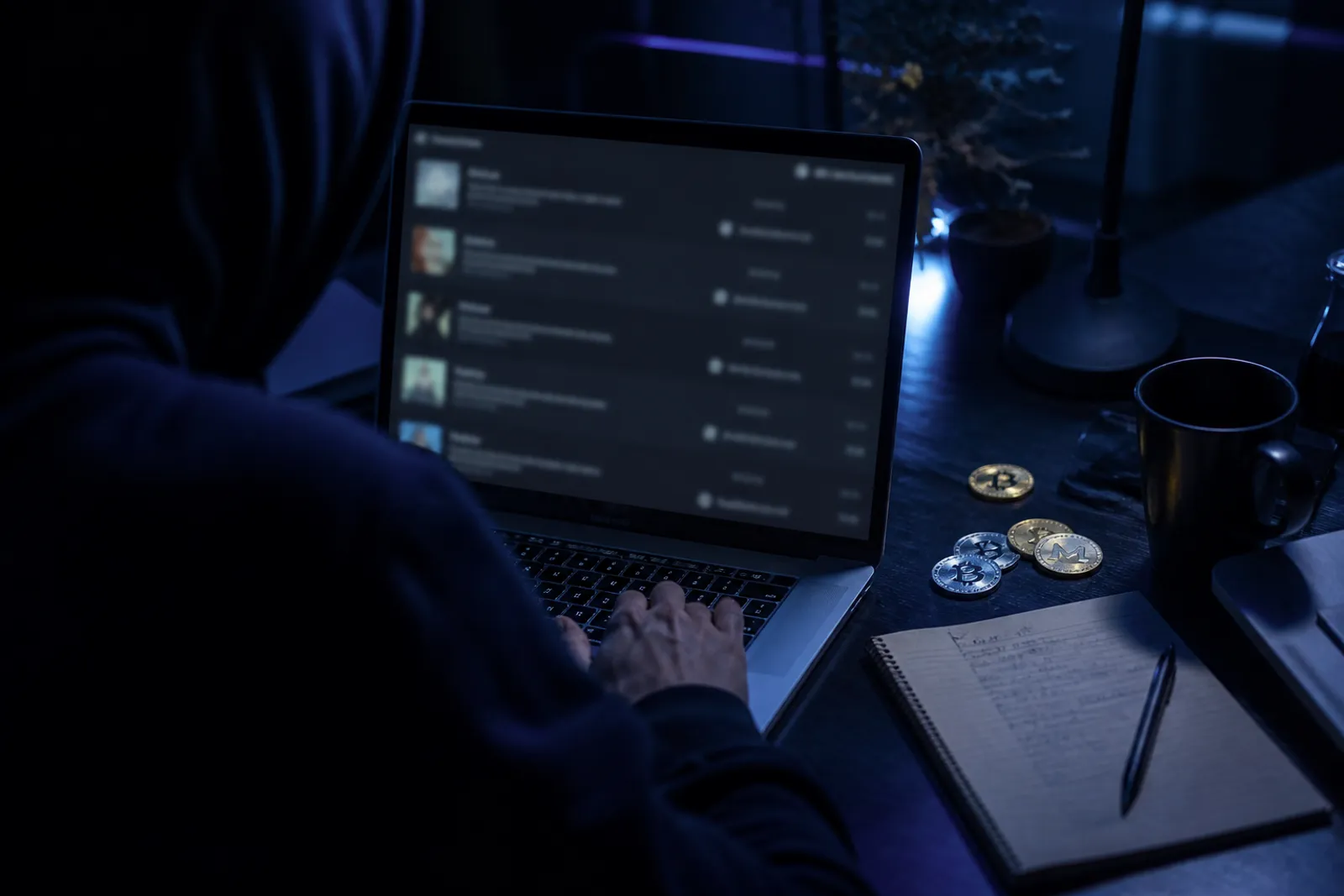
For most security professionals and business owners, Dark Web Price Index 2025-2026: Current Market Rates and Stolen Personal Data & Identity Information Pricing provide the essential baseline—you'll understand what your organization's data is worth to criminals and can prioritize defenses accordingly. Medical records at $250–$310 (1) and bank logins at $200–$1,000 (1) reveal where attackers focus effort. If you're responsible for financial systems or need to justify security budgets with trend data, add Price Comparison: 2021-2026 Trends to see how credit card prices dropped from $240 to $110 (1) while overall card data costs doubled (2), demonstrating shifting attacker economics that directly inform your risk model.
What to Look for in Dark Web Price Data
Source Verification and Recency
Price data loses relevance within weeks as marketplaces shift and law enforcement disrupts operations. Check when the source last updated its figures and whether it cites specific marketplace names, forum threads, or researcher observations rather than aggregated estimates from unknown origins.
Geographic and Currency Context
Stolen credentials for US bank accounts command different prices than European or Asian accounts due to verification difficulty and fraud detection systems. Verify that the price list specifies target regions and converts cryptocurrency values to a stable reference currency with a clear exchange rate date.
Product Specification Detail
A "credit card" listing means nothing without knowing the card type (Visa vs. Amex), balance verification status, CVV inclusion, and cardholder country. Useful price data breaks down each product tier with the exact attributes that affect value, so you can map it to your organization's actual exposure.
Sample Size and Marketplace Coverage
Prices from a single vendor or forum thread don't represent the broader market. Look for data that samples multiple active marketplaces or aggregates listings over a defined period, and note whether it covers Tor-based markets, Telegram channels, or both—each has distinct pricing dynamics.
Methodology Transparency
Credible sources explain how they collected data: manual marketplace scraping, automated monitoring, researcher purchases, or law enforcement disclosures. If a price list doesn't describe its collection method or cite any verifiable research, treat the numbers as speculative and cross-reference with academic or threat intelligence reports.
Dark Web Prices List
| Category | Price Range | Data Type | Market Trends | Payment Methods | Risk Factors |
|---|---|---|---|---|---|
| Stolen Personal Data | $1 - $310 | Social Security numbers, medical records | Increasing demand for medical records; oversupply of SSNs | Cryptocurrency, cash | High risk of identity theft |
| Financial Credentials | $110 - $1,000 | Credit cards, bank accounts | Declining credit card prices; stable bank login prices | Cryptocurrency, Monero | Risk of financial loss |
| Hacked Accounts | $5 - $200 | Single logs, subscription services | Stable prices for basic accounts; rising for subscriptions | Cryptocurrency, cash | Risk of account takeover |
| Cybercrime Services | $15 - $350 | Malware, phishing kits | Increasing prices for advanced services | Cryptocurrency, cash | Risk of legal consequences |
| Market Factors | n/d | n/d | Price fluctuations based on supply and demand | n/d | n/d |
| Price Trends 2021-2026 | n/d | n/d | Doubling of stolen payment card prices; stable for others | n/d | n/d |
| Payment Methods | n/d | n/d | Rise of Monero for privacy | n/d | n/d |
| Data Protection Priorities | n/d | n/d | Focus on high-value data like medical records | n/d | n/d |
Dark Web Price Index 2025-2026: Current Market Rates
The Dark Web Price Index for 2025-2026 provides a detailed overview of the current market rates for various types of stolen data and services. A comprehensive analysis of nearly 75,000 listings reveals significant price variations based on data type, geographical factors, and quality. Below is a summary table that outlines the price ranges for selected categories, highlighting the differences in costs between U.S. and international offerings.
| Category | Price Range (USD) | Data Type | Market Trends | Payment Methods | Risk Factors |
|---|---|---|---|---|---|
| Stolen Personal Data | $1 - $310 | Social Security numbers, medical records | Increasing demand for medical records; oversupply of SSNs (1) | Cryptocurrency, cash | High risk of identity theft |
| Financial Credentials | $110 - $1,000 | Credit cards, bank accounts | Declining credit card prices; stable bank login prices (1) | Cryptocurrency, Monero | Risk of financial loss |
| Hacked Accounts | $5 - $200 | Single logs, subscription services | Stable prices for basic accounts; rising for subscriptions (1) | Cryptocurrency, cash | Risk of account takeover |
| Cybercrime Services | $15 - $350 | Malware, phishing kits | Increasing prices for advanced services (1) | Cryptocurrency, cash | Risk of legal consequences |
Medical records are the highest-valued personal data class, priced between $250 and $310 per record, while U.S. Social Security numbers are available for as little as $1 to $6 due to oversupply (1). Credit cards with high balances can command prices from $110 to $120, reflecting a significant drop from previous years (1). The analysis also indicates that Japanese payment cards are the most expensive, averaging $22.8, compared to cheaper cards from regions like the Democratic Republic of Congo, priced at $0.94 (2).
This pricing data is essential for cybersecurity professionals and business owners to assess their risk exposure. It highlights where attackers focus their efforts and how the value of stolen data fluctuates over time. Understanding these dynamics can help prioritize data protection strategies and allocate security resources effectively.
Stolen Personal Data & Identity Information Pricing
Stolen personal data, including Social Security numbers (SSNs), driver's licenses, and passports, is a key commodity on the dark web, with prices varying significantly based on the type of information and its quality. For instance, SSNs are priced between $1 and $6 due to their oversupply, while full identity packages, which may include a name, address, SSN, and date of birth, can range from $20 to $100 (1) (3). This variation reflects the demand and supply dynamics within the dark web marketplaces.
Driver's licenses and passports are typically more valuable, with prices influenced by the country of origin. For example, authentic documents from countries with stricter identity verification processes command higher prices compared to those from regions with less stringent measures. In bulk purchases, discounts may apply, allowing buyers to acquire multiple identities at a lower per-item cost. Individual pricing for these documents can fall within the ₹500 to ₹4,000 range, which translates to approximately $6 to $48 (4).
The pricing structure can also be influenced by the individual’s credit score. Higher credit scores can enhance the value of personal data, especially when it includes financial credentials. For example, bank login credentials with low balances are priced between $200 and $500, while those with high balances can reach $1,000 or more (1).
This information is crucial for cybersecurity professionals and business owners, as it highlights the potential risks associated with identity theft and the varying costs of stolen data. Understanding these price ranges can help organizations assess their exposure to dark web threats and prioritize their security measures accordingly.
Financial Credentials: Credit Cards, Bank Accounts & Payment Data
Financial credentials are among the most sought-after items on the dark web, with prices varying significantly based on factors such as card limits, balance verification, and geographic origin. Credit card dumps, which include the card number and CVV, typically range from $110 to $120 for high-balance cards, reflecting a decrease from a peak of approximately $240 in previous years (1). In contrast, lower-balance cards may sell for less, depending on their usability and the issuing country. For instance, Japanese payment cards are the most expensive at an average of $22.8, while cards from the Democratic Republic of Congo can be as low as $0.94 (2).
Bank account login credentials also show a wide price range, with low-balance accounts priced between $200 and $500, while those with substantial balances can command over $1,000 (1). The variation in pricing is influenced by the perceived risk of detection and the ease with which the accounts can be accessed. PayPal and cryptocurrency wallet access is similarly priced, often contingent on the balance and the vendor's reputation within the dark web community.
The fluctuation in prices is largely due to supply and demand dynamics, as well as recent data breaches that impact the availability of credentials. For example, a significant increase in the price of stolen payment card data has been observed over the past two years, with some prices doubling or even tripling (2). Additionally, the use of sophisticated phishing kits that bypass multi-factor authentication (MFA) adds another layer of complexity, with such services priced between $120 and $350 per month (1).
Understanding the pricing landscape of financial credentials is critical for cybersecurity professionals and business owners. It not only informs risk assessments but also guides the implementation of protective measures against potential breaches and fraud.
Hacked Accounts & Subscription Services
Hacked accounts, particularly for popular subscription services, are available at significantly lower prices compared to financial data. For instance, Netflix accounts can be found for approximately $44 per year, while shopping accounts like Amazon or FedEx typically range from $22 and up (4). Email accounts are another target, often priced between $5 to $50, depending on their age and associated security features. The lower pricing for subscription services can be attributed to their perceived value and the fact that they do not directly involve financial transactions, making them less risky for buyers seeking anonymity.
The pricing structure for hacked accounts reflects market dynamics where demand for quick access to services drives prices down. For example, basic single logs can be purchased for as little as $5, while subscription services with more extensive access can reach up to $200 per month, depending on the features included (1). This contrasts sharply with financial credentials, such as bank login details, which can range from $200 to over $1,000 based on the account balance (1). The disparity in pricing highlights the lower risk of immediate financial loss associated with hacked accounts compared to the potential for significant losses linked to financial data theft.
These hacked accounts are particularly appealing to individuals looking to exploit services without the complexities of handling financial transactions. However, it’s crucial to recognize the limitations and risks involved, including the possibility of account recovery measures that could lead to loss of access. Before engaging in any transactions, ensure that you understand the specific terms of service for the accounts you are considering. The landscape of hacked accounts remains fluid, necessitating ongoing vigilance for both buyers and providers of such services.
Cybercrime Services & Malware Pricing
Cybercrime services and malware offerings on the dark web come with a varied pricing structure, influenced by factors such as target complexity, duration, and the sophistication of the services. Hacker-for-hire services typically range from $50 to $5,000, depending on the scope of the attack and the expertise required. For example, a basic hacking service may cost around $50, while highly skilled attackers can charge upwards of $5,000 for more complex operations involving extensive planning (4).
DDoS attack services are priced between $10 and $300 per hour, with longer durations leading to discounts. The effectiveness of these attacks can depend on the target's infrastructure and the attack's intensity. Malware-as-a-service packages can vary significantly, with basic stealer malware starting at $15, while subscription models may reach $200 per month for more advanced capabilities (1). Ransomware kits, which include the tools necessary to carry out attacks, typically range from $200 to $2,000, influenced by the sophistication of the encryption methods used (4).
Zero-day exploits command high prices, often ranging from $5,000 to $100,000, based on their rarity and potential impact. These exploits are particularly valuable because they target unpatched vulnerabilities in software, making them a preferred choice for cybercriminals (4).
When assessing these services, consider how factors such as target complexity and service duration can affect pricing. For example, a simple phishing attack may be cheaper than a targeted ransomware campaign against a large corporation. Understanding these pricing dynamics is essential for cybersecurity professionals and business owners to gauge their risk exposure and develop appropriate protective measures.
What Determines Dark Web Prices: Market Factors
The pricing of goods and services on the dark web is heavily influenced by various market factors, including supply and demand dynamics, data freshness, geographic origin, and competition among marketplaces. For instance, the availability of data breaches plays a significant role; with over 270,000 customer records leaked, the oversupply can drastically lower prices, such as U.S. Social Security numbers, which can be found for as little as $1 to $6 (1). In contrast, complete medical records, which are highly prized, can command between $250 and $310 per record due to their value in identity theft schemes (1).
Data freshness and verification status also affect pricing. Fresh data typically fetches higher prices because it is more likely to be usable for fraudulent activities. On the other hand, outdated or unverifiable data can see significant price reductions. Geographic origin impacts prices as well; for example, stolen payment cards from Japan are the most expensive, averaging $22.8, while cards from less regulated areas, like the Democratic Republic of Congo, can be as low as $0.94 (2).
Competition among dark web marketplaces further influences prices. Platforms like Abacus, STYX, and Brian's Club create a competitive environment that can drive prices down or up based on the perceived quality and reliability of the data being sold. This competition can lead to fluctuating prices for similar items, making it essential for buyers to monitor multiple sources to assess the best deals.
Understanding these factors is crucial for cybersecurity professionals and business owners to evaluate their risk exposure. By analyzing market trends and pricing structures, you can better prioritize your data protection strategies and allocate resources effectively.
Price Comparison: 2021-2026 Trends
The pricing of goods and services on the dark web has shown significant fluctuations from 2021 to 2026, influenced by various factors including market saturation and major data breaches. Research conducted by NordVPN analyzed nearly 75,000 listings for stolen data and revealed that the prices of certain items have dramatically changed over this period. For instance, complete medical records are now valued at $250 to $310 each, reflecting their high demand and low supply due to stringent data protection measures in healthcare (1).
Conversely, the price of U.S. Social Security numbers has plummeted to between $1 and $6 in 2025-2026 as a result of oversupply, indicating that the market has become saturated with this type of data (1). Similarly, the value of credit cards with high balances has decreased from approximately $240 in 2021 to between $110 and $120 in 2026, as the market adjusts to increased law enforcement actions and the availability of stolen data (1).
The impact of major breaches cannot be overlooked. The release of large datasets has led to a temporary surge in the availability of personal data, significantly affecting pricing dynamics. For example, the price of stolen payment card data has doubled or tripled in some instances over the past two years, highlighting the volatility of this market segment (2). Moreover, sophisticated phishing-as-a-service kits, which allow attackers to bypass multi-factor authentication, are priced between $120 and $350 per month, reflecting the growing complexity of cybercrime tools available on the dark web (1).
Understanding these trends is crucial for cybersecurity professionals and business owners as they navigate the evolving landscape of dark web threats. By keeping track of pricing changes and their underlying causes, you can better assess your organization's risk exposure and implement appropriate security measures.
How Criminals Actually Purchase: Payment Methods & Marketplaces
Cryptocurrency is the primary payment method used by criminals on the dark web, with Bitcoin and Monero being the most popular. Bitcoin's traceability poses risks for users, leading many to prefer Monero, which offers enhanced privacy features that obscure transaction histories (5). The total cryptocurrency inflows to drug vendors and darknet markets surpassed $2.5 billion in 2025, indicating a robust market for these transactions (6).
In 2026, active marketplaces such as Abacus, TorZon, and the Russian Market continue to facilitate the exchange of illicit goods and services. These platforms often employ escrow systems to enhance trust between buyers and sellers, allowing funds to be held until both parties fulfill their obligations. This mechanism can influence pricing, as sellers may charge higher fees for goods that require more trust or verification (4).
Tracking transactions on these platforms is inherently challenging due to the anonymity provided by cryptocurrencies and the decentralized nature of dark web marketplaces. Law enforcement has made strides in disrupting these operations, as evidenced by the arrests of over 270 individuals involved in dark web activities during operations like RapTor, but the dynamic and secretive nature of these markets complicates enforcement efforts (7).
Understanding these payment methods and marketplace dynamics is crucial for cybersecurity professionals and business owners. It provides insights into potential risks and helps in developing strategies to mitigate exposure to dark web threats.
Protecting Your Data: Value-Based Security Priorities
Identifying and prioritizing the protection of valuable data types is essential for effective cybersecurity. Complete medical records are currently the highest-value personal data on the dark web, with prices ranging from $250 to $310 each, highlighting their significance in identity theft schemes (1). In contrast, U.S. Social Security numbers are significantly less valuable, priced between $1 and $6 due to oversupply (1). Understanding these price dynamics allows you to allocate resources effectively; for instance, investing in credit monitoring services for high-value financial data can mitigate risks associated with potential breaches.
When considering dark web monitoring services, costs typically range from $800 to $2,000 annually. This investment can be justified by the potential value of the data being monitored. For example, bank login credentials with low balances sell for $200 to $500, while those with high balances can exceed $1,000 (1). By assessing the value of your data against the costs of monitoring services, you can make informed decisions about your security priorities.
Legal considerations are also paramount when researching the dark web. Engaging in activities that involve purchasing stolen data can expose you to legal risks, including potential prosecution. Ensure that your research remains within legal boundaries and consider consulting with legal professionals if you are uncertain about specific actions. By taking these practical steps, you can better protect your data and ensure that your security measures are aligned with the value of the information at risk.
Advantages and Disadvantages of Dark Web Price Monitoring
- Advantages
- You gain concrete pricing benchmarks that help quantify risk exposure, such as knowing medical records cost $250–$310 while Social Security numbers sell for $1–$6, allowing you to prioritize protection budgets accordingly [1].
- Understanding market trends from 2021 to 2026 reveals which data types are becoming oversupplied or scarce, enabling you to anticipate future threats before they materialize in your organization.
- Price intelligence informs cost-benefit analysis for security investments, such as justifying $800–$2,000 annual monitoring services against the $200–$1,000 value of compromised bank credentials [1].
- Tracking cybercrime service costs ($50–$5,000 for hacker-for-hire, $10–$300/hour for DDoS) helps you assess the likelihood and sophistication of attacks your organization might face [4].
- Cons
- Dark web prices fluctuate rapidly due to major breaches and market saturation, meaning today's pricing data may not accurately reflect tomorrow's threat landscape or your actual exposure.
- Researching dark web marketplaces carries legal risks, as accessing certain platforms or engaging with stolen data can expose you to prosecution even when conducting legitimate security research.
- Price data alone does not reveal attack vectors or vulnerabilities specific to your infrastructure, requiring additional threat intelligence to translate pricing trends into actionable security measures.
- The anonymity of cryptocurrency transactions and decentralized marketplaces makes it difficult to verify pricing accuracy or predict when law enforcement disruptions will temporarily alter market dynamics [5][7].
Things readers ask
How much is your data worth on the dark web?
Your data's value varies widely depending on the type: complete medical records command $250 to $310 per record, making them the highest-value personal data class in 2026 (1). Bank login credentials with high balances can reach $1,000 or more, while low-balance logins sell for $200 to $500 (1). Credit cards with high balances are priced at approximately $110 to $120, down from a peak of $240 in 2020-2021 (1). In contrast, U.S. Social Security numbers have dropped to just $1 to $6 due to oversupply (1), and fullz packages bundling name, address, SSN, and date of birth cost approximately $20 to $100 (3).
Can the FBI track the dark web?
Yes, the FBI actively tracks and investigates dark web activity through specialized units like the Joint Criminal Opioid and Darknet Enforcement (JCODE) team, established in 2018 to target drug trafficking on the darknet (7). Operation RapTor, one of JCODE's coordinated global efforts, resulted in the arrest of 270 darknet vendors, buyers, and administrators across multiple continents, seizing over $200 million in currency and digital assets along with more than 1,500 kilograms of drugs including fentanyl (7). While cryptocurrency and anonymity tools complicate tracking, law enforcement has developed sophisticated techniques to trace transactions and identify users, particularly when Bitcoin's known traceability liability is exploited (5).
Is it legal to buy things on the dark web?
Purchasing stolen data, illegal drugs, hacking tools, or other illicit goods on the dark web is illegal in most jurisdictions and can expose you to prosecution regardless of your intent. Even accessing certain dark web marketplaces or engaging with stolen data for security research purposes carries legal risks, as law enforcement may not distinguish between legitimate research and criminal activity. If you need to conduct dark web research for cybersecurity purposes, consult with legal professionals beforehand to ensure your activities remain within legal boundaries and consider using authorized threat intelligence services instead of direct marketplace access.
What are the biggest darknet markets in 2026?
In 2026, active marketplaces such as Abacus, TorZon, and the Russian Market continue to facilitate the exchange of illicit goods and services, with total cryptocurrency inflows to drug vendors and darknet markets reaching slightly over $2.5 billion in 2025 (6). These platforms employ escrow systems to enhance trust between buyers and sellers, allowing funds to be held until both parties fulfill their obligations. The competitive environment among marketplaces like STYX and Brian's Club influences pricing and the perceived quality of data being sold, though law enforcement operations continue to disrupt these platforms regularly (7).
How do criminals pay on dark web marketplaces?
Cryptocurrency is the primary payment method on dark web marketplaces, with Bitcoin and Monero being the most popular choices. Monero has become the preferred currency on many darknet markets because of its stronger privacy features compared to Bitcoin's known traceability liability (5). Money-laundering services charge approximately 2% of the amount being laundered as a fee, with the rate scaling based on volume (1). Marketplaces often employ escrow systems to hold funds until both parties fulfill their obligations, which can influence pricing as sellers may charge higher fees for goods requiring more trust or verification.
How to access the dark web in 2026?
Accessing the dark web typically requires specialized software like the Tor browser, which routes your connection through multiple encrypted nodes to provide anonymity. However, you should understand that merely accessing dark web marketplaces or engaging with stolen data carries significant legal risks, as law enforcement may not distinguish between legitimate security research and criminal activity. If you need dark web intelligence for cybersecurity purposes, consider using authorized threat intelligence services or dark web monitoring platforms that cost $800 to $2,000 annually rather than directly accessing marketplaces yourself. Always consult with legal professionals before conducting any dark web research to ensure your activities remain within legal boundaries.
Bottom Line: How to Use Dark Web Price Data
You should treat dark web pricing intelligence as a risk-quantification tool rather than a shopping guide. Start by identifying your organization's highest-value data assets—medical records at $250–$310 each and high-balance bank credentials exceeding $1,000 represent your critical exposure points (1). Allocate protection budgets accordingly, prioritizing multi-factor authentication and encryption for these data types while accepting lower-cost monitoring for oversupplied items like Social Security numbers ($1–$6) (1). If you manage financial or healthcare data, justify the $800–$2,000 annual cost of dark web monitoring services by calculating the replacement cost of a single compromised record multiplied by your database size.
Avoid direct marketplace access for research purposes, as law enforcement operations like RapTor demonstrate that even passive observation carries prosecution risk (7). Instead, subscribe to authorized threat intelligence feeds or consult our Dark Web Market List 2025 for context without legal exposure. Skip monitoring services entirely if your data consists primarily of low-value items like basic contact information, redirecting those funds toward proactive security controls that prevent breaches rather than detecting aftermath.
Explore More Insights on Dark Web
Discover additional resources and articles to enhance your knowledge.
View More ResourcesNotes and sources
- Dark Web Price Index 2026: How Much Is Your Data Worth? - SOCRadar
- Stolen payment card data analyzed - NordVPN
- Dark Web Pricing Intelligence Enterprise Risk Signal in 2025-2026 - DarkOwl
- Research on dark web market prices - NordVPN
- Dark Web Markets: What Are They and What Role Does Crypto Play - Arkham Intelligence
- Drugs and Darknet Markets: 2026 Crypto Crime Report - Chainalysis
- Global Operation Targets Darknet Drug Trafficking - FBI